Until today, the majority of the world’s farms are managed by independent smallholders. Altogether, those small farms operate around 80% of the world’s agricultural land. Unfortunately, their low yields and incomes combined with lack of market and financial access can increase the risk of deforestation and biodiversity loss.
Including smallholders into sustainable supply chains provides an opportunity to ensure stable living standards and reduce the risk of deforestation. However, the integration of smallholders into sustainable supply chains is difficult due to the complexity of supply chains and limited information. The location of smallholders is often unknown and traceability a big challenge for downstream supply chain actors. Against this background, Meo Carbon Solution, in a joint project with Global Risk Assessment Services (GRAS) and International Sustainability & Carbon Certification (ISCC), developed a new and user-friendly mobile application which allows mapping, tracking and monitoring of smallholders and enables users to trace back raw material to smallholder field level.
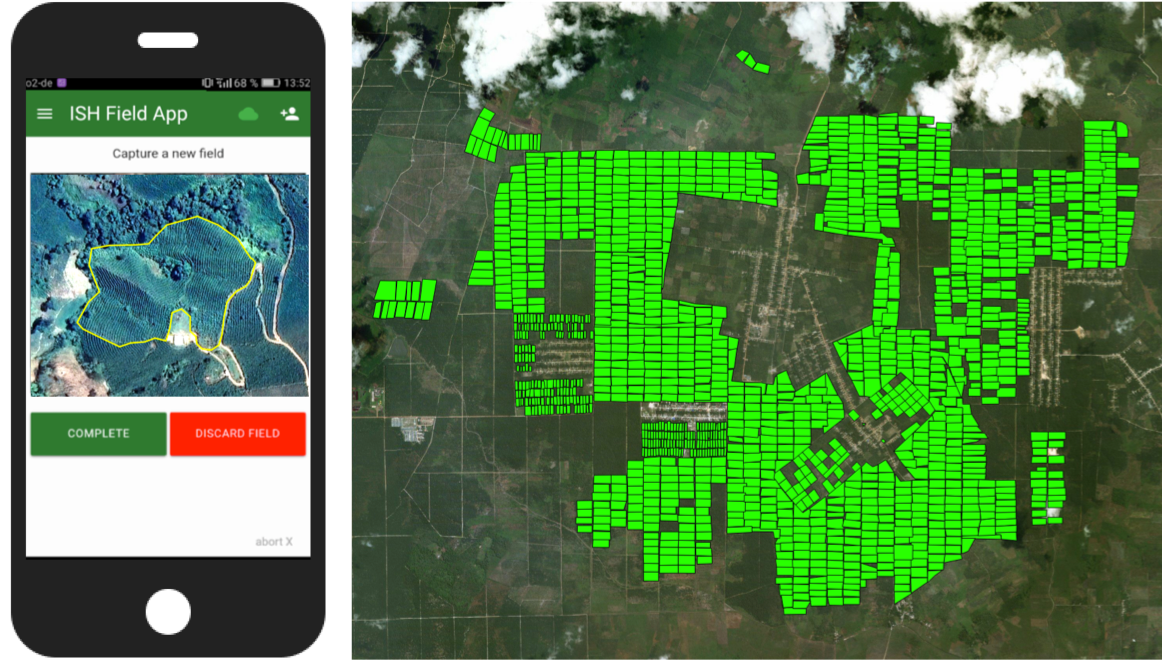
The Smallholder App
The Smallholder App is a new and user-friendly mobile application which allows the collection of basic farmer data, pictures and polygons of farmer fields. All data can be securely uploaded into a cloud-based database. The app is customizable according to the specific needs of user.
The Tracking App
The Tracking app allows to trace back crops to smallholder fields. Using QR codes for identification, the data collector can identify the amount of delivered crops per smallholder, register entire delivery tours and data at the recipient (eg palm oil mill). Through the tracking app, fully traceable supply chains can be achieved.
The GRAS MIS
The GRAS MIS allows the visualization of all collected data, which have been uploaded into the cloud. The system includes an integrated sustainability assessments function, which can automatically analyze farmer field polygons against protected areas, deforestation, peatlands, fires and more. Further, the systems allows the user to identify gaps (eg low yields) and plan specific trainings. The continuous data collection through the apps allows the monitoring (eg performance improvements) of the smallholders. Data can be entered into the system either via the apps or through specific upload functions. All data (eg field outlines as geojson) can be easily downloaded for further needs.

Research and demonstration project on renewable jet fuel (DEMO-SPK)

Meo Carbon Solutions participated in the DEMO-SPK project, that was implemented within the German Mobility and Fuels Strategy by the German Federal Ministry of Transport and Digital Infrastructure (BMVI). The overall objective of the project was to investigate and verify the behaviour of mixtures of several renewable jet fuels with conventional JET A-1 kerosene under realistic conditions of a major airport (Leipzig/Halle, Germany). The project, as the first of its kind in this set-up, successfully demonstrated the use of renewable jet fuel in the general fuel supply infrastructure.
Meo Carbon Solutions contributed with its expertise to set up a sustainability documentation for renewable aviation fuels and multi-blends. Such a documentation involves sustainability requirements for various feedstocks (e.g. no deforestation, protection of highly biodiverse and high carbon stock areas worldwide) and the traceability and transparency along the entire supply chain. The summary of the results can be viewed here.


Team Event Maastricht – We love bees!
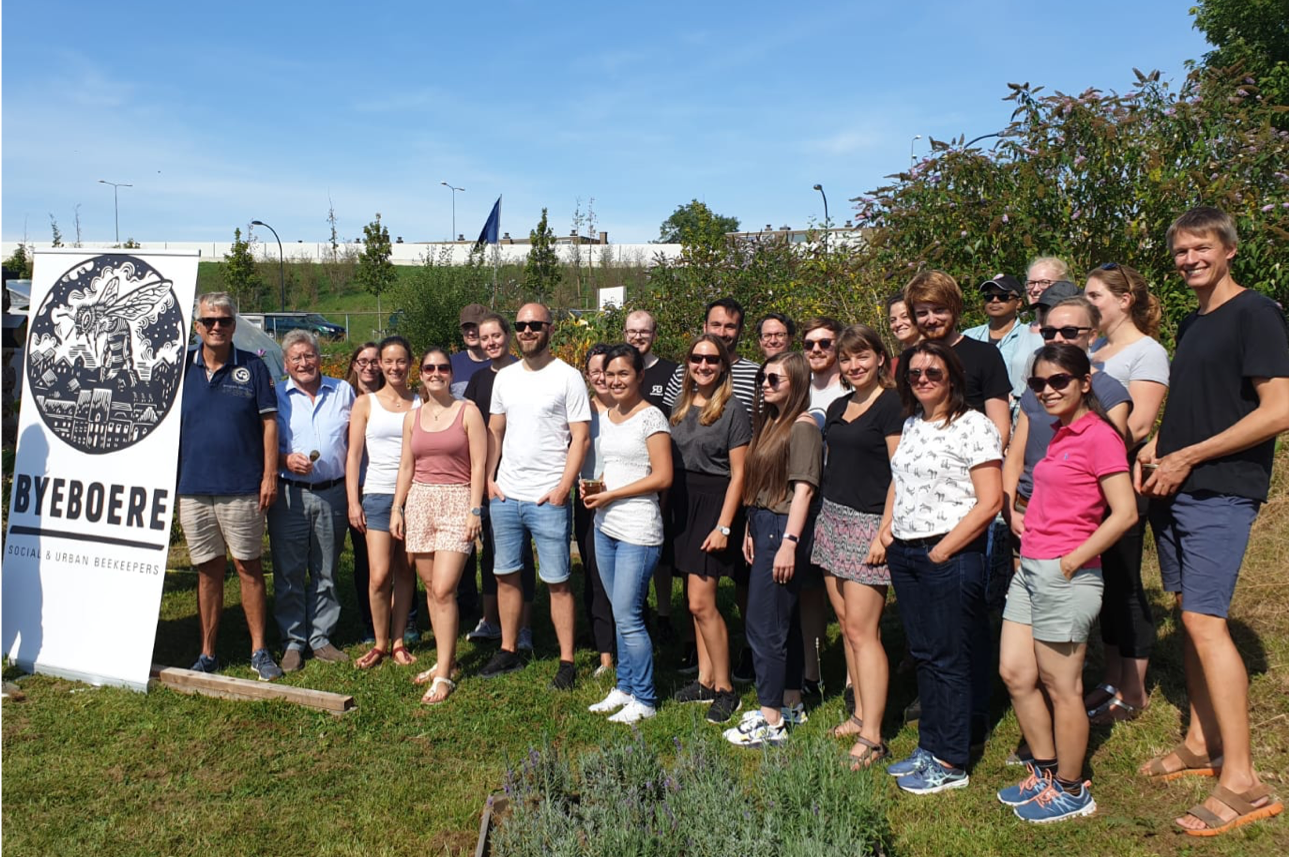
At MCS, we support the conservation of biodiversity and understand the importance of honey bees and other pollinators for the ecosystems and agricultural crops.
Biodiversity of species and ecosystems is declining faster than at any time in human history, states the IPBES in its latest report. 47% of our natural ecosystems have declined relative to earliest estimates, the number of species facing extinction reaches around 1 million and pollinator loss pose a risk to up to $577 billions of annual global crop output (IPBES report May 2019). In this context the role of restoration of ecosystems and conservation of biodiversity is a s significant as the reduction of emissions within compensation and mitigation.
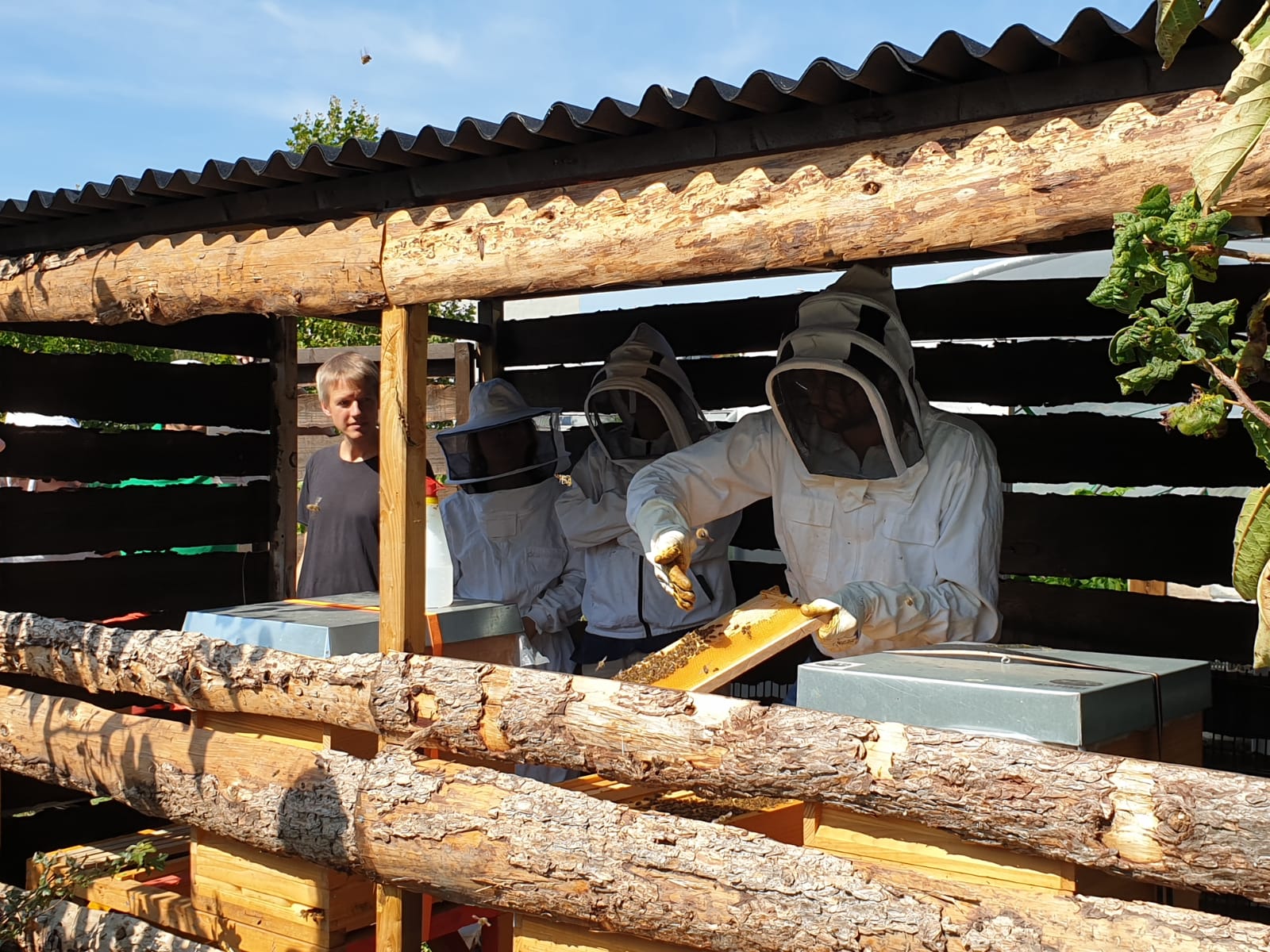
At this years team event we learned more about beekeeping and our little helpers at the Byeboere Social & Urban Beekeepers Project in Maastricht. The beekeepers are working in different districts of Maastricht providing active and educational activities for local residents and everyone interested with insights on the world of bees and the importance of greenery in the city. Bees are seriously threatened by a lack of suitable breeding places and sufficient food. That is why the Byeboere want to guard the bee population in Maastricht and ensure that the habitat is enlarged.
Two trained beekeepers passed on their knowledge about bees and told us passionately about the importance of these special insects while we were sitting in their flourishing community garden watching bees in and around their hive.